 Construction sites are constantly changing. New crews arrive, tasks shift from day to day, and hazards can develop quickly if safety is not actively managed. While comprehensive safety programs are essential, many of the most effective injury prevention strategies are surprisingly simple.
Small improvements made consistently can have a significant impact on reducing accidents, improving productivity, and strengthening safety culture across a jobsite.
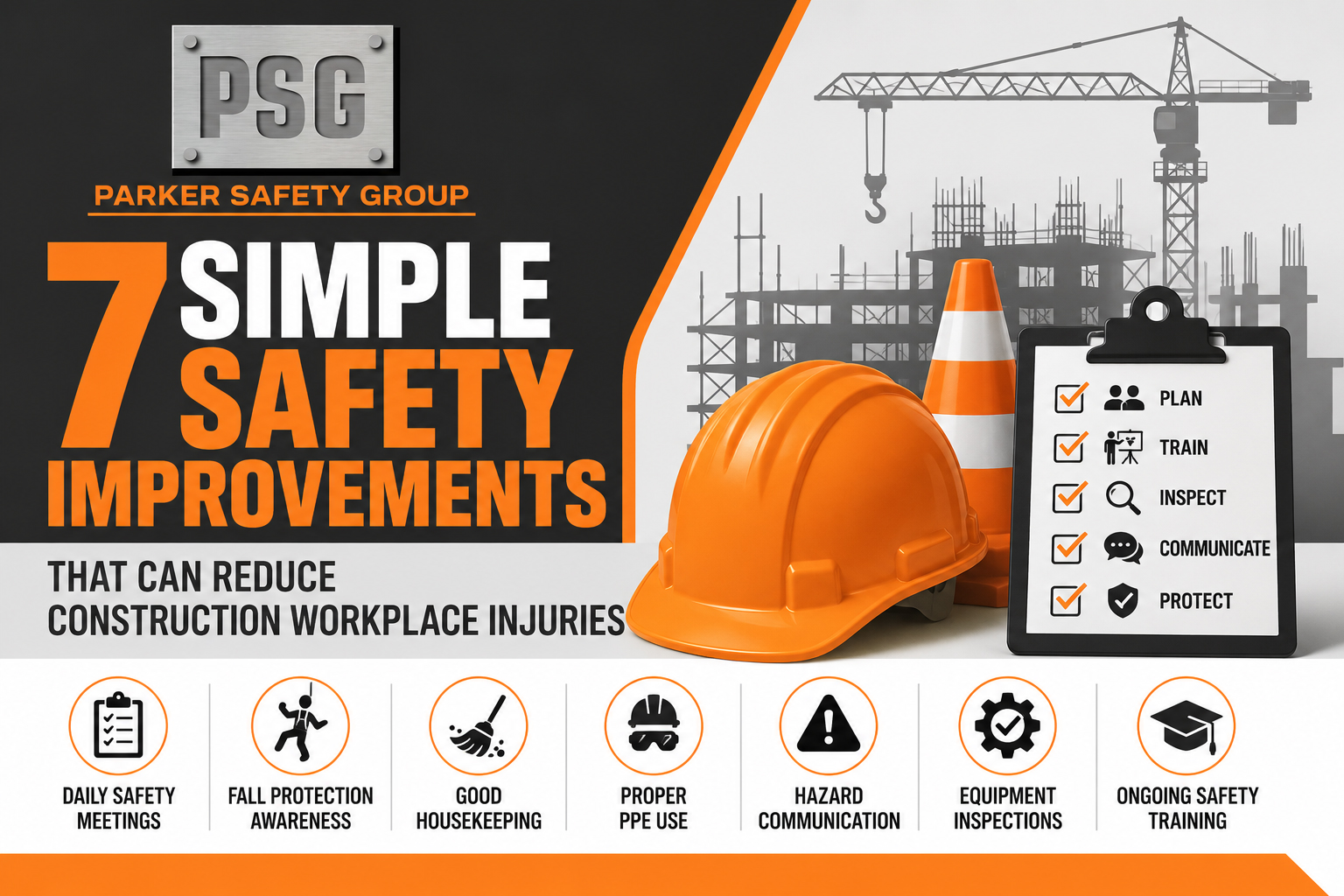
Here are seven practical safety improvements that construction companies can implement to help reduce workplace injuries and create safer, more efficient jobsites.
- Conduct Daily Pre-Task Safety Meetings
A brief safety discussion at the start of each workday can help crews identify hazards before work begins.
Daily pre-task meetings should cover:
- Planned work activities
- Potential hazards
- Weather conditions
- Equipment needs
- Site-specific safety concerns
These conversations help ensure everyone understands the day’s risks and expectations before stepping onto the jobsite.
- Improve Fall Protection Awareness
Falls remain one of the leading causes of serious injuries and fatalities in construction. Even experienced workers can become complacent when working at heights.
Companies should regularly inspect:
- Harnesses and lanyards
- Guardrails
- Anchor points
- Scaffolding systems
- Ladders
Providing ongoing fall protection training helps reinforce safe work habits and keeps crews focused on hazard recognition.
- Strengthen Housekeeping Practices
Poor housekeeping contributes to many preventable injuries on construction sites.
Common hazards include:
- Trip hazards from cords and debris
- Improperly stored materials
- Blocked walkways
- Slippery work surfaces
Encouraging crews to clean as they work can significantly reduce injury risks while improving overall site organization and efficiency.
- Ensure Proper Personal Protective Equipment (PPE) Use
Personal protective equipment serves as a critical line of defense against workplace hazards.
Depending on the task, PPE may include:
- Hard hats
- Safety glasses
- Gloves
- Hearing protection
- Respirators
- High-visibility apparel
Regular PPE inspections and refresher training help ensure equipment is being used properly and consistently. Parker Safety Group and LeadSMART Training offer PPE-related safety training to help workers understand proper selection, use, and maintenance.
- Increase Hazard Communication Training
Construction workers encounter numerous hazardous materials throughout the course of a project.
Proper hazard communication training helps workers:
- Understand Safety Data Sheets (SDS)
- Recognize chemical hazards
- Follow labeling requirements
- Protect themselves from exposure risks
Effective Hazard Communication (HazCom) training helps reduce injuries and illnesses while supporting OSHA compliance.
- Inspect Equipment Before Every Use
Equipment failures can lead to serious accidents and costly project delays.
Workers should be trained to inspect equipment such as:
- Forklifts
- Aerial lifts
- Scaffolding
- Power tools
- Respirators
Daily inspections help identify issues before they become safety incidents. Training programs focused on MEWPs (aerial lifts), forklifts, respirators, and other construction equipment can further improve worker awareness and safe operation.
- Invest in Ongoing Safety Training
One of the most effective ways to reduce workplace injuries is through continuous safety education.
Construction sites evolve constantly, and workers need ongoing training to stay current with hazards, regulations, and best practices.
The OSHA Outreach Training Program is designed to help workers recognize, avoid, and prevent common construction hazards while improving overall workplace safety awareness.
How Parker Safety Group and LeadSMART Training Can Help
Implementing safety improvements is easier when you have experienced professionals supporting your team.
Through a partnership between Parker Safety Group and LeadSMART Training Solutions, construction companies throughout New England have access to a wide range of practical, real-world training programs designed to reduce risk and improve jobsite performance. Available training includes:
- OSHA 10 and OSHA 30
- Fall Protection
- Supported Scaffold Training
- Silica Hazard Communication
- Respirator Training and Fit Testing
- MEWP (Aerial Lift) Training
- Lead in Construction
- First Aid and CPR
- MA CSL Renewal Courses
Training is available through open-enrollment classes, private company training sessions, and supplemental online learning options, allowing employers to minimize downtime while improving workforce safety.
By combining practical training with jobsite experience, Parker Safety Group and LeadSMART help construction companies create safer workplaces, strengthen compliance efforts, and reduce the likelihood of costly workplace injuries.
Reducing workplace injuries does not always require major changes. Often, simple improvements such as better housekeeping, equipment inspections, hazard communication, and ongoing training can have a lasting impact on safety performance.
For construction companies throughout New England, investing in these practical safety improvements helps protect workers, improve productivity, and support long-term business success.