 Lead-based paint can turn an otherwise routine renovation, repair, or painting project into a serious health and compliance concern. When painted surfaces are cut, sanded, scraped, drilled, demolished, or otherwise disturbed, lead-contaminated dust and debris may spread beyond the immediate work area.
That is why contractors working in older homes and child-occupied facilities need to determine how lead requirements may affect a project before work begins. Depending on the circumstances, a contractor may presume lead-based paint is present and follow the applicable lead-safe work practices, or an appropriately certified professional may test the components that will be disturbed.
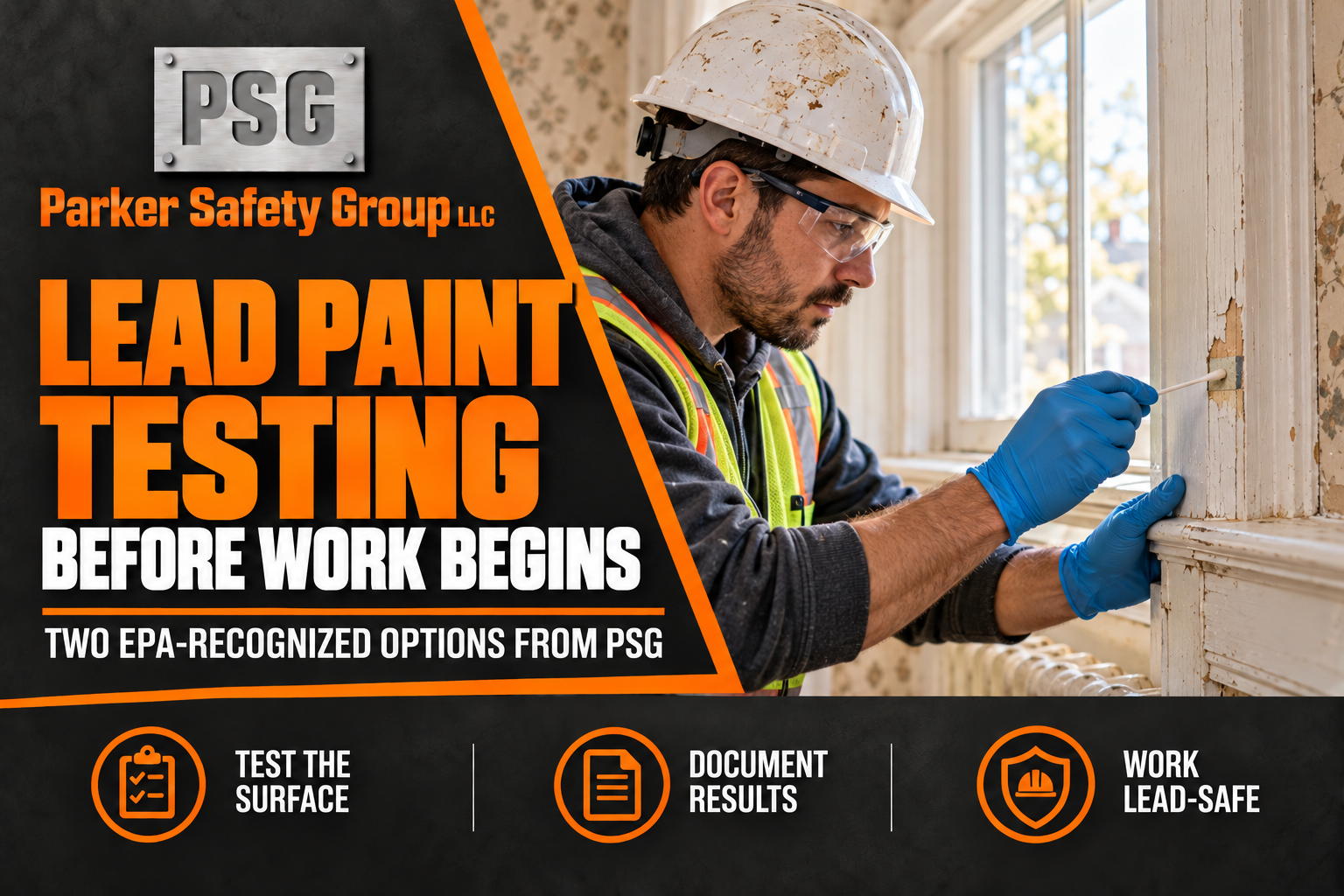
Parker Safety Group offers two convenient lead paint testing options for professionals: Luxfer LeadCheck™ Swabs and D-Lead® Lead Paint Test Kits. Both are EPA-recognized for specified substrates when used by qualified professionals in accordance with the manufacturer’s instructions.
Why Lead Paint Testing Matters
Lead paint was widely used in homes and other buildings before it was banned for residential use in 1978. Although intact lead-based paint may remain undisturbed for years, renovation activities can create hazardous dust and paint chips that are easily tracked through a property or inhaled by workers and occupants.
Exposure to lead can cause serious health effects. Young children and pregnant women are especially vulnerable, but contractors, maintenance employees, painters, and other workers may also be exposed when proper precautions are not taken.
For work covered by the EPA’s Renovation, Repair and Painting Rule, commonly called the RRP Rule, a firm may assume lead-based paint is present and follow the required lead-safe practices. Testing is another available path. When testing is used to determine that regulated lead-based paint is not present, the determination must be made by a certified renovator, certified lead inspector, or certified risk assessor using an accepted method and following the applicable documentation requirements.
An appropriate test conducted before work begins can help a company:
- Identify whether the components being disturbed may contain lead-based paint
- Plan containment, personal protective equipment, cleaning, and waste handling
- Prepare a more accurate project scope and price
- Reduce the risk of exposing workers, occupants, and neighboring areas
- Determine whether RRP lead-safe work practices apply to the tested components
- Create the records needed to support project decisions
A test kit is an important screening and compliance tool, but it does not replace training, certification, project planning, or the manufacturer’s full instructions.
Option 1: Luxfer LeadCheck™ Swabs
Luxfer LeadCheck Swabs provide a quick, portable way to screen painted surfaces for lead. This is the familiar LeadCheck formulation formerly associated with 3M and now manufactured by Luxfer Magtech.
The self-contained swabs are designed for rapid field use, with most results appearing in less than 30 seconds. When lead is detected, the test area and/or swab changes to a pink or red color. Each PSG kit also includes confirmation cards that can be used to help verify an individual test result.
Key advantages of Luxfer LeadCheck Swabs
- Fast results, often in 30 seconds or less
- Compact and easy to carry between jobsites
- No separate laboratory equipment needed
- Non-toxic, odorless, disposable swabs
- Confirmation cards included
- Available from PSG in 8-swab and 48-swab quantities
EPA recognizes Luxfer LeadCheck for RRP use by a certified renovator on wood, ferrous metal, drywall, and plaster. The recognized substrates matter: a kit should not be assumed to support an RRP determination on a material that EPA does not list for that product.
Brief overview of how LeadCheck is used
The basic process is commonly described as “crush, shake, and swab.” The user exposes all paint layers down to the substrate in the test area, activates the liquids inside the swab by crushing the indicated points, shakes and squeezes the swab as directed, and rubs the tip on the prepared surface. A pink or red response indicates lead.
This is only a general introduction. Always follow the current instructions packaged with the product, including the required confirmation procedure, testing time, substrate limitations, cleanup, and documentation steps.
Option 2: D-Lead® Lead Paint Test Kits
D-Lead Lead Paint Test Kits offer another EPA-recognized option for determining whether lead-based paint is present. PSG carries kits containing either 7 tests or 24 tests.
D-Lead uses a small paint sample rather than a swab rubbed directly across the prepared surface. The kit includes a sampling tool and D-Wipe® Prep Towels to help reduce the chance that outside contamination will affect the sample. Results are available in minutes, and the system can detect lead chromate found in some red, yellow, orange, and green coatings without requiring additional waiting time.
Key advantages of D-Lead test kits
- Results in minutes
- Small 3/16-inch sample required
- Sampling tool included for more controlled sample collection
- Prep towels included to reduce cross-contamination
- Designed to detect lead chromate in paint of any color
- Available from PSG in 7-test and 24-test kits
EPA recognizes D-Lead for RRP use by a certified renovator on wood, ferrous metal, drywall, and plaster. PSG’s product information also identifies many broader applications—including structural steel, aluminum, concrete, brick, stucco, siding, bridges, water towers, ships, docks, shipyards, and storage tanks—but users should distinguish general product capabilities from the specific substrates recognized by EPA for an RRP determination.
Brief overview of how D-Lead is used
In general, the user cleans the area as directed, collects a small sample that includes all layers of paint, places the sample into the supplied test container, and adds the test solutions in the prescribed sequence. The container is mixed according to the instructions, and the resulting color is compared with the kit’s reference information to interpret the result.
Because sample size, preparation, reagent order, timing, result interpretation, and confirmation steps all matter, users should read and follow the complete current instruction manual before performing a test.
Which Lead Paint Test Kit Is Right for Your Project?
Both kits can be useful additions to a contractor’s lead-safety supplies, but they support different preferences in the field.
Luxfer LeadCheck Swabs may be the better fit when speed, portability, and a simple self-contained format are the priorities. They are convenient for contractors who need rapid results while evaluating painted components at a jobsite.
D-Lead may be preferable when the user wants a controlled paint-sample process, is working with paint colors that may contain lead chromate, or needs the flexibility of a multi-test kit with its own sampling and preparation materials.
Some companies keep both products available so their certified personnel can select the most appropriate option for the substrate, coating, jobsite conditions, and documentation needs.
Testing Is Only One Part of Lead-Safe Work
A negative result can affect how a tested component is handled, but only when the test is appropriate for the substrate, performed correctly by a qualified person, and documented as required. A positive result—or a decision to presume lead is present—means the company must plan the work accordingly.
That may include proper containment, dust-minimizing work methods, worker protection, cleaning verification, waste controls, occupant communication, and project records. State and local requirements may also be more stringent than federal rules, so contractors should confirm which standards apply where the project is located.
Parker Safety Group helps contractors and other employers prepare for lead-related work through safety consulting, jobsite evaluations, written programs, and practical guidance. PSG also supplies lead-safety products that professionals can use to equip their crews and plan projects responsibly.
Explore PSG’s full selection of Lead Paint Test Kits or contact Parker Safety Group for help selecting the right products and strengthening your company’s lead-safe work practices.
This article provides general information and is not legal advice or a substitute for product instructions, certification, or project-specific regulatory guidance. Always follow the current manufacturer instructions and all federal, state, and local requirements applicable to the work.