
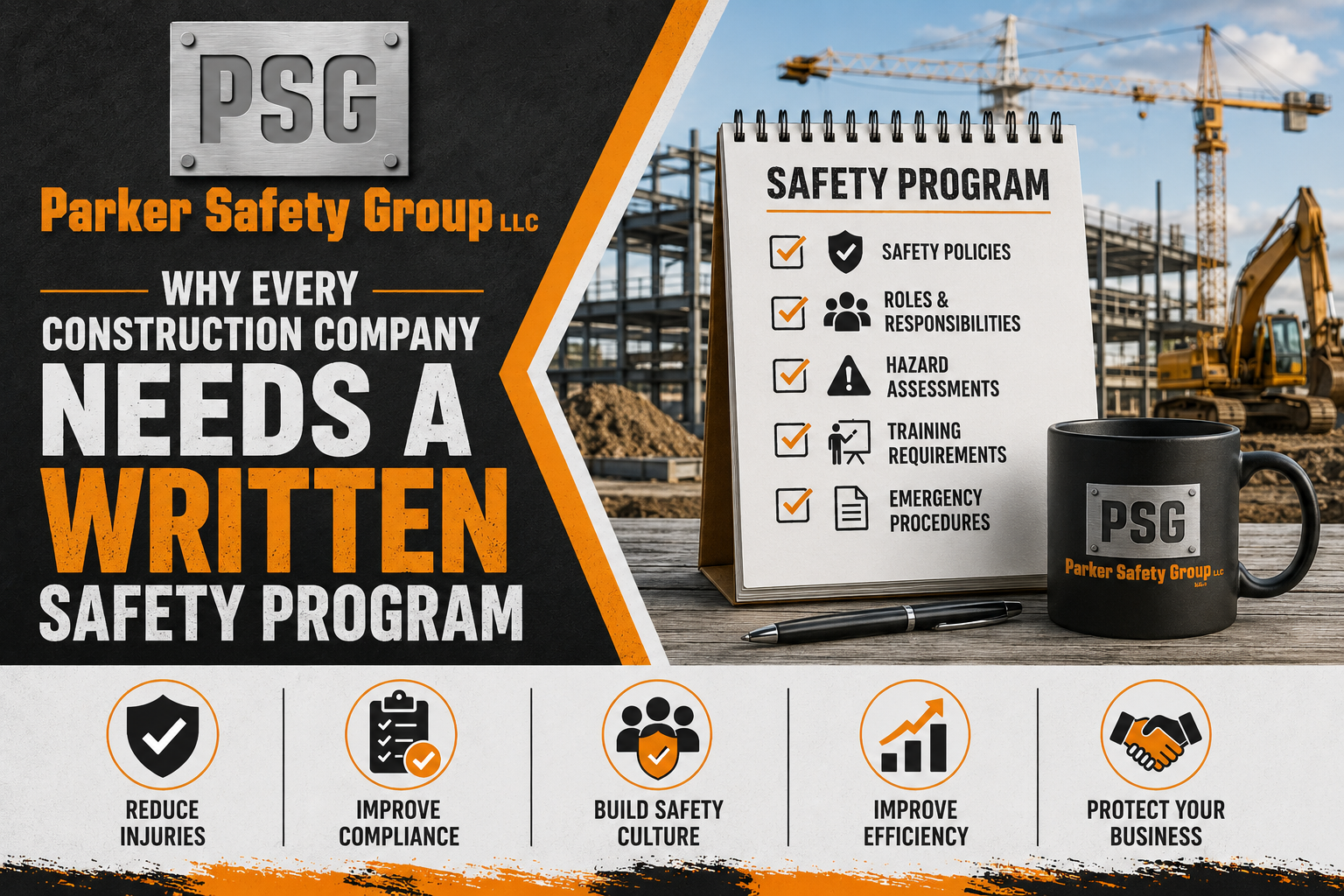
 Construction sites are among the most challenging work environments in any industry. Workers routinely face hazards involving falls, heavy equipment, electrical systems, excavation work, hazardous materials, and changing jobsite conditions. While experience and common sense play important roles in workplace safety, they are not enough on their own.
One of the most effective ways to reduce workplace injuries, improve compliance, and create safer jobsites is through a well-developed written safety program.
For construction companies throughout New England, a written safety program is more than just a compliance document. It serves as a roadmap for protecting workers, managing risk, and supporting long-term business success.
What Is a Written Safety Program?
A written safety program is a formal document that outlines a company’s policies, procedures, responsibilities, and expectations regarding workplace safety.
It provides clear guidance for:
- Employees
- Supervisors
- Project managers
- Subcontractors
- Company leadership
Rather than relying on verbal instructions or inconsistent practices, a written safety program creates a standardized approach to safety across all projects and jobsites.
Why Written Safety Programs Matter
Without a documented safety program, companies often find themselves reacting to incidents rather than preventing them.
A written program helps establish:
- Clear safety expectations
- Consistent procedures
- Defined responsibilities
- Documented training requirements
- Accountability throughout the organization
When workers understand what is expected and where to find safety procedures, they are better equipped to recognize hazards and work safely.
Supporting OSHA Compliance
Many OSHA standards require employers to have documented safety procedures, training records, and written programs.
Depending on the nature of the work being performed, construction companies may need written programs related to:
- Hazard Communication
- Respiratory Protection
- Fall Protection
- Lockout/Tagout
- Personal Protective Equipment (PPE)
- Silica Exposure Control
- Emergency Action Plans
Having these programs in place demonstrates a commitment to compliance and can help companies prepare for OSHA inspections more effectively.
Reducing Workplace Injuries
One of the primary goals of a written safety program is to prevent injuries before they occur.
A strong safety program helps workers:
- Identify hazards
- Understand safe work practices
- Follow consistent procedures
- Respond appropriately during emergencies
Construction projects involve numerous moving parts, and hazards can change daily. A written program helps ensure that safety remains a priority regardless of the project’s size or complexity.
Improving Communication Across the Jobsite
Construction projects often involve multiple contractors, subcontractors, supervisors, and crews working together.
A written safety program improves communication by providing a shared set of expectations and procedures.
This can help reduce:
- Misunderstandings
- Inconsistent safety practices
- Confusion regarding responsibilities
- Gaps in training or oversight
When everyone is working from the same safety framework, jobsites tend to operate more smoothly and efficiently.
Building a Stronger Safety Culture
A written safety program is often the foundation of a strong safety culture.
Companies with well-developed safety programs demonstrate that safety is not simply a requirement, it is a core business value.
Strong safety cultures often lead to:
- Greater employee engagement
- Improved morale
- Better hazard reporting
- Increased accountability
- Fewer workplace incidents
When workers see leadership actively supporting safety initiatives, they are more likely to participate and take ownership of safety practices themselves.
Protecting Your Company’s Reputation
Today, many project owners, developers, and general contractors expect subcontractors to maintain formal safety programs.
A written safety program can help:
- Strengthen prequalification applications
- Improve client confidence
- Support contract opportunities
- Demonstrate professionalism
For many construction companies, a documented safety program has become a competitive advantage when pursuing new work.
Written Programs Are Only Effective When Supported by Training
Even the best-written safety program will have limited value if employees are not properly trained.
Regular safety training helps reinforce the policies and procedures outlined within the program and ensures workers understand how to apply them in real-world situations.
Topics commonly addressed through construction safety training include:
- OSHA 10 and OSHA 30
- Fall Protection
- Hazard Communication
- Respiratory Protection
- Silica Awareness
- Personal Protective Equipment
- Scaffold Safety
- OSHA Construction Site First Aid
Training and written programs work together to create safer and more effective jobsites.
How Parker Safety Group Can Help
Developing and maintaining a written safety program can be challenging, especially for busy construction companies managing multiple projects.
Parker Safety Group helps contractors throughout New England create practical, effective safety programs tailored to their operations. Their team can assist with:
- Written safety program development
- OSHA compliance support
- Jobsite safety assessments
- Safety consulting
- Employee safety training
In addition, through LeadSMART Training Solutions, companies can access a wide range of construction-focused training programs that support and strengthen their safety initiatives.
By combining written programs with ongoing training and expert guidance, construction companies can reduce risk, improve compliance, and create safer workplaces for everyone involved.
Final Thoughts
A written safety program is one of the most important tools a construction company can have. It provides structure, improves communication, supports OSHA compliance, and helps prevent workplace injuries.
Most importantly, it demonstrates a commitment to protecting workers and building a stronger, safer organization.
For construction companies throughout New England, investing in a written safety program is not just about meeting requirements, it is about creating a foundation for long-term success.